


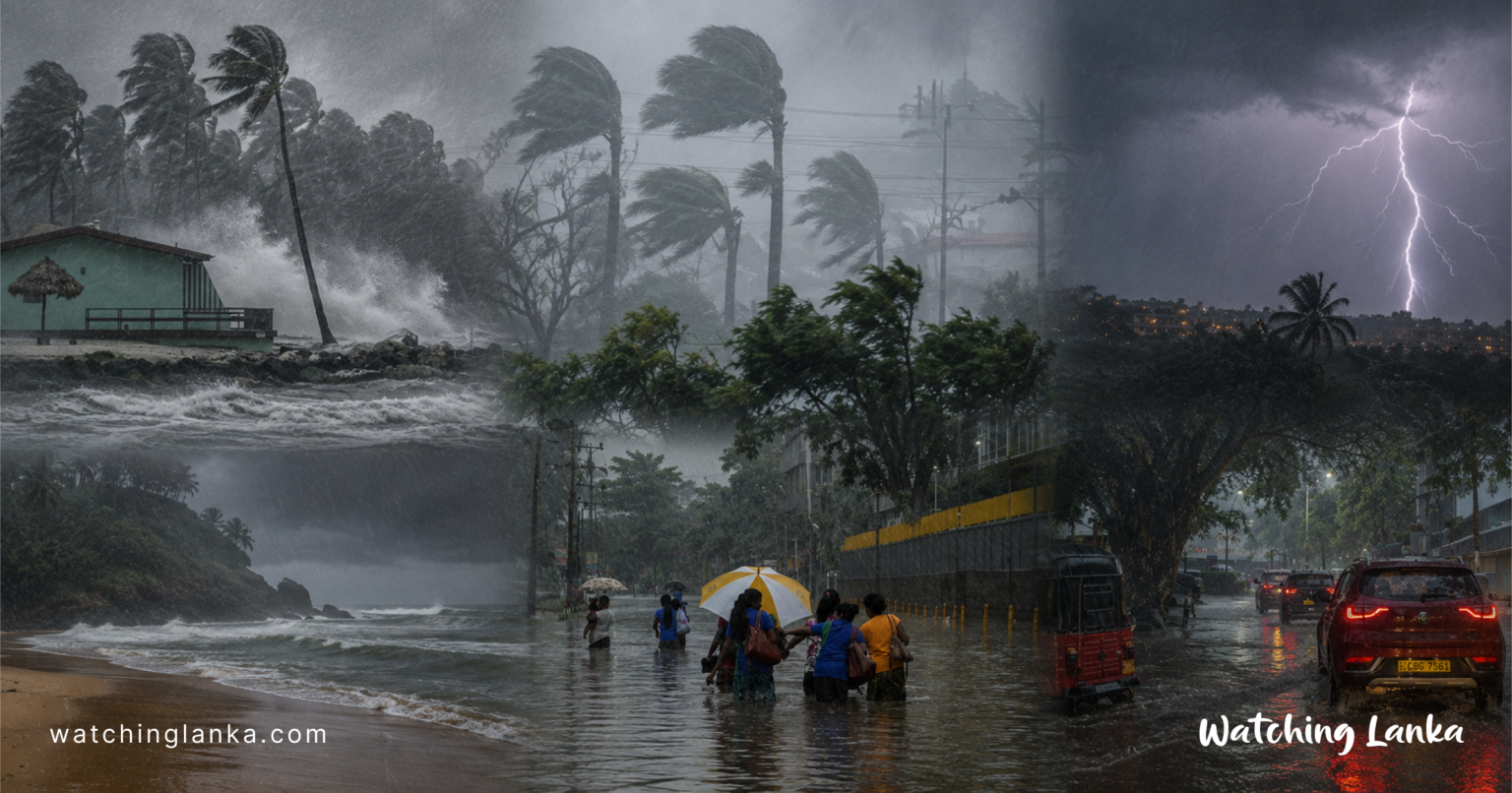
If you are living in or planning to travel across the island, staying informed about the current Sri Lanka heavy rains is essential for your safety and travel planning. Recent weather disruptions have brought heavy downpours, strong winds, and rising water levels to several parts of the country, impacting daily life and transport routes.
To help you stay ahead of the weather changes and plan your schedules safely, it is vital to keep track of official updates and advisories.
1. Current Weather Conditions and Impacted Areas
The prevailing wet weather has heavily affected several regions, particularly the hill country and Sabaragamuwa provinces. Due to continuous downpours, authorities have issued warnings regarding potential earth slips, strong winds, and rising water levels in major rivers like the Kelani and Kalu rivers. Schools in severely affected zones such as Kandy and Nuwara Eliya have also faced temporary closures due to safety concerns.
2. Essential Safety Tips During Heavy Showers
When dealing with Sri Lanka heavy rains, taking proactive precautions can prevent accidents and property damage. Here are a few vital safety steps to follow:
- Avoid Floodwaters: Never attempt to walk or drive through moving or stagnant floodwaters, as hidden hazards can be dangerous.
- Secure Property: Clear blocked drains around your home and secure loose outdoor items that could be blown away by strong winds.
- Monitor Travel Routes: Check road conditions before setting off on long journeys, especially if your route involves hill country paths prone to earth mounds sliding.
3. Staying Updated with Official Advisories
Weather patterns can shift rapidly during monsoon and inter-monsoon seasons. Always rely on updates provided by the Department of Meteorology and disaster management authorities rather than unverified social media rumors. Keeping emergency contact numbers handy is also a wise precaution.
Conclusion
While Sri Lanka heavy rains bring temporary disruptions to normal routines, prioritizing safety and staying prepared can help you navigate the weather safely. Keep yourself updated, stay indoors during severe storms, and look out for your community’s well-being!
Read Also: Best Things to Do in Arugam Bay: Surf, Food & Wildlife